I live and share Flowism in the most human way possible to benefit as many humans as possible.
This is my Flow, my how. It serves my Dream (what) which is designed by my Story (why). My 108s are the history of how well I’ve been Flowing.

Lifeflow, Flow for short, is to life as workflow is to work. Your Flow is simply the daily processes, protocols, systems, habits, routines, and rituals you use each day. Ideally they are designed to create a balance between making progress on your Dream, maintaining a healthy mind and body, and enjoying the journey.
Something that should be kept in mind when designing and implementing one’s Flow is the balance between short-term happiness and sacrificing short-term happiness for progress towards one’s long-term goals. Sacrificing short-term happiness for long-term progress is sometimes necessary for “life satisfaction”.
“The key here is memory. Satisfaction is retrospective. Happiness occurs in real time. In Kahneman’s work, he found that people tell themselves a story about their lives, which may or may not add up to a pleasing tale. Yet, our day-to-day experiences yield positive feelings that may not advance that longer story, necessarily. Memory is enduring. Feelings pass.”
A Nobel Prize-winning psychologist says most people don’t really want to be happy, QZ.com, Ephrat Livni, December 21, 2018
I’m in the process of decolonizing myself and my communities. Anytime I share a concept that comes from the colonial capitalist world, even if it’s good, I want to include a point of view that opposes that framework. I offer this quote from philosopher and psychiatrist Frantz Fanon to contrast Kahneman’s view on life satisfaction’s relationship with memory.
“I am not a prisoner of history. I should not seek there for the meaning of my destiny… In the world through which I travel, I am endlessly creating myself.”
The very “enduring memory” we use to construct our life’s story is shaped by forces outside of our control. To achieve true life satisfaction, we must liberate ourselves from the narrative imposed by the history of oppression.
Life satisfaction does not only have to come from having a pleasing story to look back on. It can also be created by seizing the power to create our own story, moment by moment. This act of “endlessly creating myself” can be the, or part of the, foundation upon which we build a satisfying life of authentic purpose and engagement.
Late Evening
It took me a long time to realize this simple fact, but a good day starts with a great night.
- Phone automatically goes into airplane mode at 9 pm
- Take meds (lithium, Seroquel, lamictal, sleep)
- Update eMoods (bipolar app)
- Update Daylio (testing it with an idea for IFS)
- Meditate (basic meditation, Flowist reflection)
- Journal (Flowist review, a novel experience to be grateful for, simple account of the day)
- Hip exercises
- Brush teeth
- Shower
- Go to sleep with a minimum 9 hour window for sleeping while giving 2 hours for morning routine
Morning Routine
I will have ideally slept 8 or more hours and have at least 2 hours free in the morning to do the following.
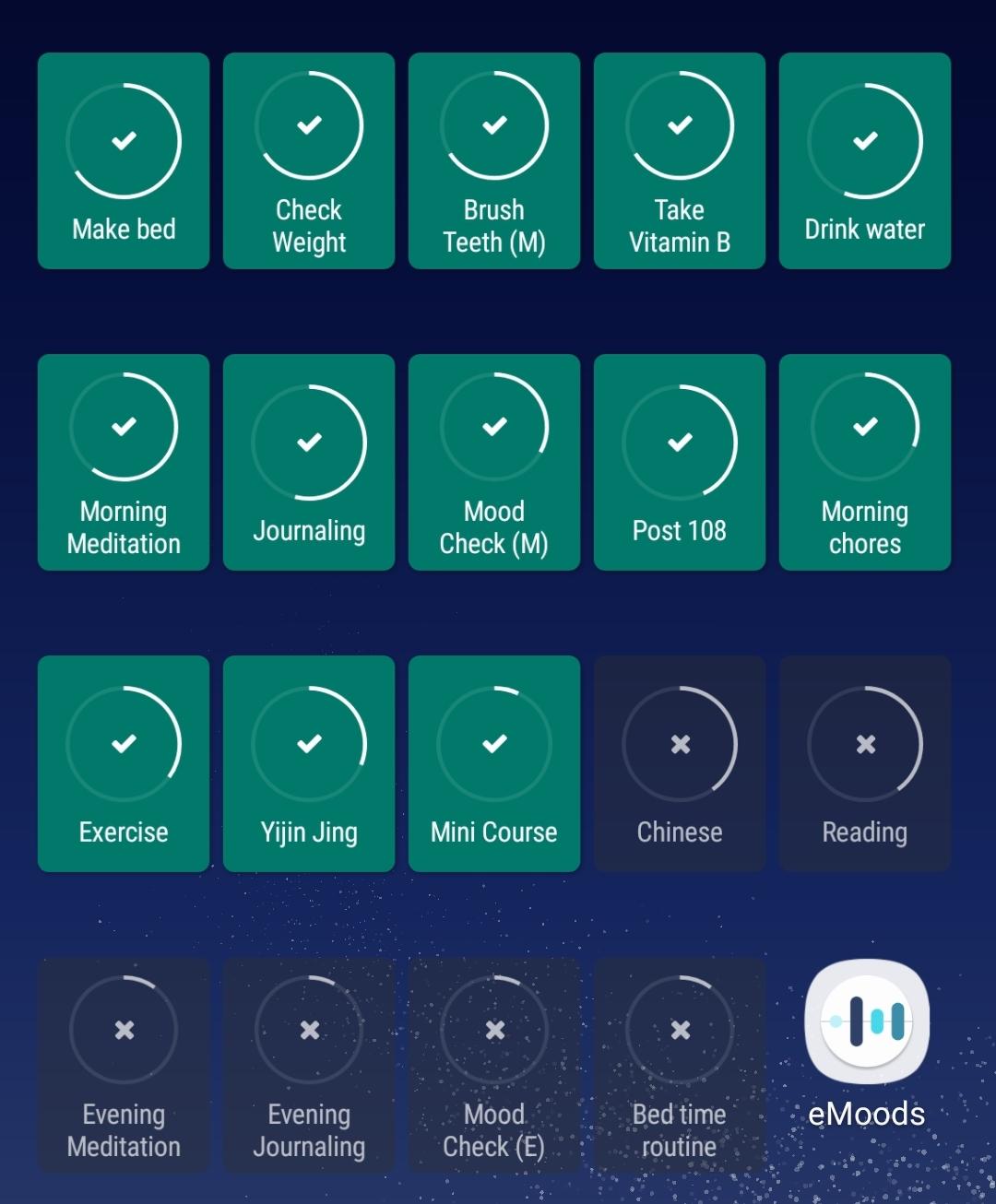
- Make the bed
- Brush my teeth
- Take meds (Lithium)
- Take vitamins (currently a multi-vitamin, vitamin B complex, and fish oil)
- Meditate, I use InsightTimer
- Journal
- Hip exercises
- Complete morning chores
- Put away dry dishes and wash any dishes from the day before
- Hang up laundry and put remaining clothes in the dryer
- Clean litter boxes (every M, W, and F)
Afternoon
- Do Internal Family Systems prompts.
- Read one of these books: Body Keeps the Score, one of the IFS books, or work through the DBT workbook.
- Write. (Flowism, The 108, blog post, script for a video, etc.)
- Do food prep
Early Evening
Cook.
This is a time for social activities with my wife, friends, or myself (video games, additional writing, reading, music, TV/movies, YouTube, art, etc.)
Fasting
I’m experimenting with One Meal a Day as a means of managing my weight, saving time and energy, and for the associated health benefits (Johns Hopkins | Harvard | Healthline). One Meal a Day is basically fasting for around 23 hours every day. I’m thinking of adding a regular 36 hour fast as well. This is an evolving project where I’m listening to my body and doing my best to follow the science.
I’m using the app Easy Fast for tracking. It’s completely free, but you can support the developer if you want.
Apps and Tools I Use

Fitbit Charge 6 – Quality of sleep is the biggest factor when it comes to managing bipolar 1 for both prevention and prediction. I’m tracking as many things as I can to have good data for bipolar so adding a sleep tracker made sense. I went with the Charge 6 because of the price and how long Fitbit has been in the game when it comes to tracking sleep. Not needing to start an app and the addition details have already been a game changer. I’ll review it more when I have more data and experience with it.

This has been severely devalued and may actually be removed by the end of cycle 21. I can sync the data into this app from the Fitbit, but there doesn’t appear to be a reason to do that.
Sleep as Android (Website | Google Play Store) – This is the first app I used in the morning and the last app I use at night. I use Sleep as Android to monitor my sleep health. Sleep is my number one priority in life above all things in terms of mental and physical health management. If sleep isn’t your NUMBER ONE PRIORITY I highly recommend reading or listening to the book Why We Sleep. I don’t know of a good iPhone equivalent to Sleep as Android, but I’m sure there’s one out there.
Loop Habit Tracker (Website | Google Play Store) – I have all of my daily habits organized as widget buttons on a home screen listed in the order that I do them. I swipe over and click them as I get them done. This is an Android only app. HabitBull seems like it could be a good replacement app for the iPhone.
InsightTimer (Website | Google Play Store) – I use InsightTimer to track my meditation. There are a wide variety of meditations available on this app for free. There are also different communities you can join. I meditate on a meditation cushion and mat.

eMoods (Website | Google Play Store) – Straight from their website… “eMoods is a user-friendly app for patients to track symptom data relating to Bipolar I and II disorders, Depression, PTSD, and Anxiety Disorders”. I use eMoods at the end of the day. I rate my levels of elevated mood, depression, anxiety, and irritability. I can also track the meds I’m taking inside of it. I’ve also included some custom tracking points that I’ll talk about in a post.
Tracking my mood is important for me because I have Bipolar 1. I can go from zero to “crazy” real fast. If I’m monitoring my mood I have a much better chance of spotting patterns and making life adjustments in response to the change in my mood and energy.
YouTube Premium (Website) – This removes ads from YouTube, allows you to download videos or listen to them in the background, and also comes with YouTube Music.
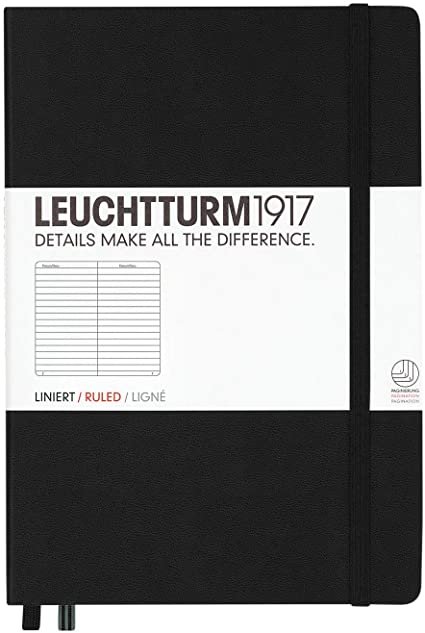
LEUCHTTURM1917 Medium Lined Notebook (Website | Amazon) – This is the type of journal I use for pen and paper journaling. I like these journals because…
- they have a table of contents you can fill out as you use it or when you finish it
- they come with stickers to label and organize them
- the paper is of a high quality
- there are perforated sheets in the back in case you want to write someone a note and rip it out
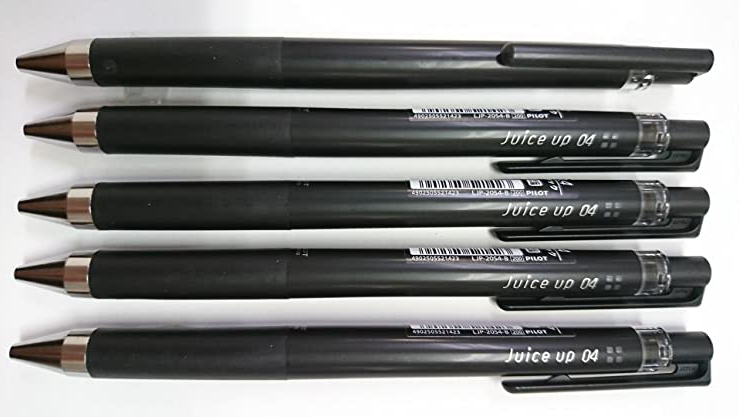
Pilot Juice up 04 (Amazon) – This is my current favorite pen.
Audible (Website | Google Play Store) – Sometimes I listen to books.
Kindle (Amazon | Google Play Store) – Sometimes I read books.
v1 | v1.1 (Updated Cycle 21, Day (1) | August 31st, 2025)
 Casey's Journal